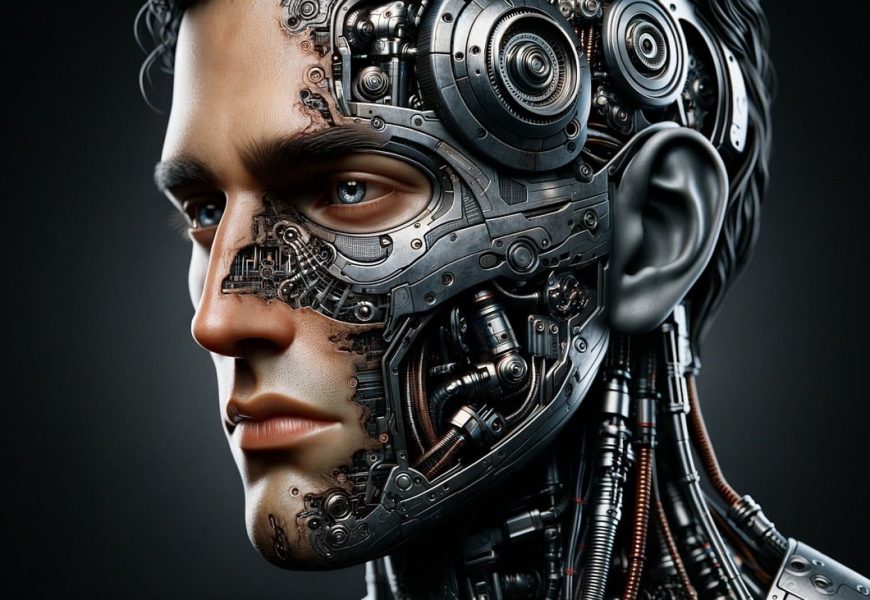
Introduction
Artificial Intelligence (AI) has seen rapid advancements over the past few years, with Generative Pre-trained Transformer (GPT) models leading the way. From simple text-based AI to highly sophisticated language models capable of understanding and generating human-like responses, the evolution of GPT has been nothing short of revolutionary. As we move into the next generation of AI, GPT models are expected to become even more powerful, efficient, and context-aware. In this article, we will explore how GPT has evolved, the latest developments in AI language models, and what lies ahead in the future of AI.
The Journey of GPT Models
The GPT series, developed by OpenAI, has significantly impacted various industries, from content creation to customer support, research, and programming assistance. Here’s a brief look at the evolution of GPT models:
GPT-1: The Foundation
- Released in 2018, GPT-1 was the first iteration, introducing the concept of unsupervised pretraining for NLP (Natural Language Processing) tasks.
- Trained on the BooksCorpus dataset, it had 117 million parameters.
- Limited in scope but laid the foundation for future advancements.
GPT-2: The Breakthrough
- Launched in 2019, GPT-2 marked a significant leap in AI capabilities with 1.5 billion parameters.
- Demonstrated the ability to generate coherent and contextually relevant text.
- Initially withheld due to concerns about misuse (e.g., generating misinformation and spam).
GPT-3: The Game Changer
- Released in 2020, GPT-3 featured a staggering 175 billion parameters, making it one of the largest AI models at the time.
- Offered exceptional capabilities in content generation, programming, translation, and conversation modeling.
- Introduced in applications such as chatbots, AI writing assistants, and automated code generation tools.
GPT-4: The Intelligent Evolution
- Introduced in 2023, GPT-4 improved upon its predecessor with multimodal capabilities, enabling it to process both text and images.
- More context-aware, creative, and capable of nuanced reasoning.
- Used for advanced applications in healthcare, legal analysis, education, and personalized AI assistants.
The Next Generation of GPT and AI Models
As AI continues to evolve, the next iterations of GPT and other models are expected to bring groundbreaking changes. Here are some key developments to expect:
1. GPT-5 and Beyond: Higher Intelligence and Efficiency
- GPT-5 is anticipated to have enhanced contextual memory, meaning it can remember previous interactions better, leading to more personalized and natural conversations.
- Improved efficiency, requiring fewer computational resources while maintaining or improving performance.
- Better handling of bias and ethical concerns, making AI-generated content more reliable and responsible.
2. Multimodal AI: Beyond Text Generation
- Future AI models will seamlessly integrate text, image, video, and audio processing.
- AI-powered real-time video editing, realistic AI-generated voices, and AI-assisted design will become commonplace.
- Example: AI creating animated content from a simple text description or generating real-time interactive avatars.
3. AGI (Artificial General Intelligence) Milestones
- Current AI models are limited to narrow intelligence, meaning they perform specific tasks well but lack general reasoning capabilities.
- The next phase of AI evolution will focus on Artificial General Intelligence (AGI), where models will be capable of reasoning, planning, and making independent decisions.
- AGI will be a significant leap toward AI systems that think, learn, and adapt like humans.
4. AI-Powered Personal Assistants: The Future of Human-AI Interaction
- AI will move beyond chatbots to become full-fledged digital personal assistants.
- Personalized AI models will be capable of handling daily tasks, learning from user preferences, and even engaging in meaningful conversations.
- Example: Imagine an AI assistant that can plan your schedule, respond to emails, and provide real-time market analysis tailored to your interests.
5. Ethical AI and Bias Mitigation
- AI’s biggest challenge today is bias in language models, which can lead to unfair or harmful outputs.
- The future of AI will focus on implementing robust bias detection and mitigation mechanisms to ensure fair and transparent AI decision-making.
- Regulatory frameworks will play a crucial role in ensuring ethical AI practices.
6. Quantum Computing and AI: The Next Frontier
- Quantum computing has the potential to revolutionize AI by handling computations at speeds unimaginable with classical computers.
- Future AI models trained on quantum processors could solve complex problems in seconds rather than weeks.
- Applications in cryptography, drug discovery, and scientific research will accelerate dramatically.
Real-World Applications of Next-Gen AI
With these advancements, AI will redefine industries in ways never seen before. Some real-world applications include:
- Healthcare: AI-powered diagnostics, personalized medicine, and real-time patient monitoring.
- Education: AI-driven tutors, personalized learning experiences, and automated grading.
- Finance: Fraud detection, AI investment strategies, and AI-powered risk assessments.
- Entertainment: AI-generated movies, music, and interactive storytelling.
- Business and Productivity: AI assistants managing meetings, generating reports, and automating workflows.
Final Thoughts: The Future of AI is Here
The evolution of GPT models and AI technologies is ushering in a new era of innovation and automation. With next-gen AI models becoming more intelligent, multimodal, and ethically responsible, the possibilities are endless. As we step into the future, the integration of AI into our daily lives will become more seamless, making technology more accessible and efficient than ever before.
While challenges remain—such as ethical AI governance, computational resource demands, and AI safety—the trajectory of AI points towards an exciting, transformative, and intelligent future.