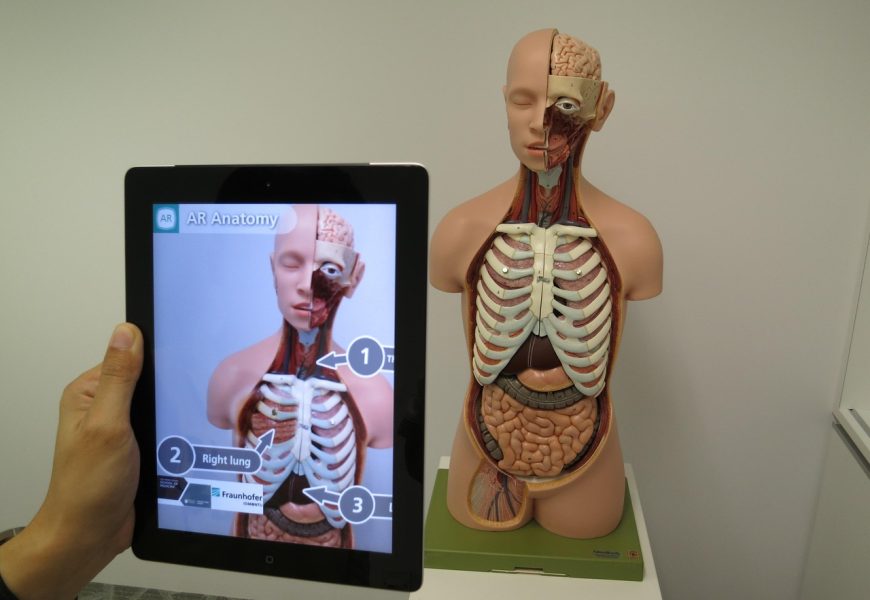
The healthcare industry is undergoing a massive transformation, thanks to AR and VR in healthcare 2025. Augmented Reality (AR) and Virtual Reality (VR) technologies are playing a crucial role in improving medical training, diagnosis, patient treatment, and overall healthcare efficiency. These immersive technologies are not only enhancing surgical precision but also revolutionizing patient care and rehabilitation.
1. Medical Training and Education
One of the most significant contributions of AR and VR in healthcare is in medical training. These technologies enable medical students and professionals to practice complex procedures in a risk-free virtual environment.
Key Benefits:
- Enhanced Learning Experience: AR and VR provide 3D anatomical simulations, allowing medical students to interact with virtual human bodies.
- Hands-On Practice: Surgeons can rehearse operations using VR simulations before performing them in real-life settings.
- Remote Learning: Medical professionals worldwide can participate in virtual medical training programs without geographical limitations.
Institutions like Johns Hopkins and Stanford Medical School have already adopted VR-based training modules, proving its effectiveness in medical education.
2. AR and VR in Surgery
Surgeons are leveraging AR and VR to improve precision and reduce risks during operations. These technologies allow real-time imaging and 3D visualizations, helping surgeons navigate complex procedures with higher accuracy.
How AR & VR Improve Surgeries:
- AR overlays important patient data directly onto the surgeon’s field of view.
- VR-assisted robotic surgeries ensure minimal invasiveness and higher precision.
- 3D organ modeling helps surgeons plan and simulate surgical procedures before the actual operation.
A notable example is the use of AR in neurosurgery, where AR-assisted procedures have shown improved outcomes in brain surgeries by providing real-time guidance.
3. Pain Management and Therapy
Virtual Reality has been proven to be an effective tool for pain management and psychological therapy. Patients experiencing chronic pain, PTSD, or anxiety disorders benefit immensely from immersive VR therapy.
Applications in Pain Management:
- Distraction Therapy: VR environments help patients manage pain by shifting their focus away from discomfort.
- Virtual Rehabilitation: Stroke and injury patients undergo VR-based therapy sessions to regain motor functions.
- Mental Health Treatment: VR is used in cognitive behavioral therapy (CBT) to treat phobias, PTSD, and depression.
Studies show that VR exposure therapy reduces PTSD symptoms by 56%, making it a powerful tool in mental health treatment.
4. Enhanced Patient Engagement and Treatment Plans
AR and VR are making patient consultations more interactive, allowing doctors to explain medical conditions and treatment plans in a visual and engaging way.
Benefits for Patients:
- 3D Visualization of Conditions: Patients can see detailed 3D models of their medical conditions, making it easier to understand diagnoses.
- Improved Treatment Adherence: Immersive VR experiences educate patients on post-surgery recovery and rehabilitation exercises.
- Reduced Anxiety: AR-assisted procedures help calm patients by visually explaining their treatments step-by-step.
By enhancing patient engagement, AR and VR contribute to better treatment outcomes and improved patient satisfaction.
5. Telemedicine and Remote Healthcare
With the rise of telemedicine, AR and VR are taking remote healthcare to the next level. These technologies bridge the gap between doctors and patients by providing immersive telehealth experiences.
How AR & VR Enhance Telemedicine:
- Remote AR-Assisted Diagnoses: Doctors can remotely examine patients in real-time using AR-enabled smart glasses.
- Virtual Consultations: Patients can interact with their physicians in a VR environment, creating a more personalized healthcare experience.
- Remote Surgery Assistance: AR allows surgeons to guide procedures remotely, assisting less experienced doctors in critical operations.
This is particularly useful in rural and underdeveloped regions where access to specialized healthcare is limited.
6. Rehabilitation and Physical Therapy
VR-based rehabilitation programs are revolutionizing physical therapy for patients recovering from injuries, strokes, or surgeries. These virtual rehabilitation sessions make therapy more engaging and effective.
Key Advantages:
- Gamified Exercises: Patients perform therapeutic activities in an interactive VR environment, making the recovery process more enjoyable.
- Real-Time Motion Tracking: AI-integrated VR systems analyze patient movements and provide instant feedback.
- Remote Rehab Sessions: Patients can undergo VR therapy from their homes, reducing the need for frequent hospital visits.
Research has shown that VR-based rehabilitation speeds up recovery and improves mobility outcomes significantly.
7. Medical Imaging and Diagnostics
AR and VR are revolutionizing medical imaging by providing advanced visualization tools for accurate diagnoses.
Impact on Diagnostics:
- 3D Imaging: Radiologists can use AR-enhanced 3D scans to detect tumors and internal injuries more precisely.
- Real-Time AR Assistance: Doctors can superimpose MRI and CT scan data onto a patient’s body for better diagnosis.
- Improved Precision: VR-powered imaging assists in detecting diseases at an early stage, reducing misdiagnoses.
These innovations improve diagnostic efficiency and help doctors make data-driven treatment decisions.
8. Emergency Response and Disaster Management
AR and VR are playing a critical role in improving emergency medical response and disaster management.
Applications in Emergency Healthcare:
- AR-Guided CPR and First Aid: First responders use AR apps to get step-by-step guidance during medical emergencies.
- VR-Based Emergency Training: Medical professionals practice responding to mass casualty incidents using VR simulations.
- Drone-Assisted AR Medical Aid: Drones equipped with AR provide real-time data for disaster response teams.
These advancements are saving lives by enhancing the effectiveness of emergency healthcare services.
Conclusion
The future of AR and VR in healthcare 2025 is incredibly promising, with innovations improving medical training, surgeries, diagnostics, and patient care. These technologies are not only transforming how healthcare professionals operate but also how patients receive treatment. As AR and VR continue to evolve, they will play an even bigger role in making healthcare more precise, accessible, and effective worldwide.